Nail changes on the toes — what they look like, why they persist, and where daily care fits
A thickened, cloudy or crumbling toenail is one of the most common reasons people start a foot-care routine. This guide explains what those changes look like, which everyday conditions keep them going, what a cosmetic product can realistically influence, and the point at which self-care should stop and a professional should look.
What actually changes in the nail
People describe it differently — “the nail went yellow”, “it got thick”, “it crumbles at the edge” — but the observable changes fall into a short list. Recognising which ones you have is more useful than a label, because it tells you what to watch as the nail grows out.
Colour change
A cloudy, yellowish, brownish or white patch, usually starting at the free edge or along one side rather than in the middle of the plate.
Thickening
The plate becomes harder to cut and lifts slightly from the nail bed. This is the change that makes clippers slip and split the edge.
Crumbling
The free edge breaks into small fragments instead of cutting cleanly. Filing often works better than cutting at this stage.
Separation
A gap appears between the plate and the bed, usually at the tip. Debris collects there, which is why keeping the nail short matters.
Surface texture
Ridges, pits or a chalky surface. Often mistaken for damage from nail polish, which can also cause it.
Skin around it
Dryness, scaling or softened white skin in the fold beside the nail — frequently present before the plate itself changes.
A dark line, a bruise after trauma, a nail that is painful, swollen or discharging, or changes in a single nail that appeared suddenly are all reasons to have it looked at rather than to start a cosmetic routine. This page is about everyday care, not diagnosis.

Why the problem persists
The uncomfortable answer is that it usually persists because of the environment around the foot, not because of a missing product. Three conditions do most of the work, and all three are ordinary.
- Moisture that never leaves. A closed shoe worn eight to twelve hours a day, put on again the next morning before it has dried. The space between the fourth and fifth toe is the narrowest and dries last, which is why it is almost always first.
- Repeated small trauma. Running, football, cycling, safety boots half a size too small. Each knock lifts the plate a fraction from the bed, and the gap collects debris.
- Shared surfaces. Pool decks, gym showers, changing-room floors, shared slippers and — the one people forget — shared nail clippers and files inside a family.
Age and circulation matter too: nails grow more slowly with age, so anything that changes appearance takes proportionally longer to show. That is not a reason to skip care; it is a reason to measure progress in months.
What daily care can and cannot influence
| Cosmetic care can affect | Cosmetic care cannot affect | |
|---|---|---|
| Skin | Dryness, comfort, appearance of the skin between the toes and around the nail fold | Any underlying medical condition |
| Nail | The appearance of the newly grown section, ease of cutting and filing | The already-grown, damaged part of the plate |
| Timeline | How consistent and pleasant the routine is to keep | How fast a nail grows — roughly 1 mm per month |
| Environment | Nothing on its own — hygiene habits do this part | Wet shoes, shared clippers, ill-fitting boots |
This is the honest framing of what products like Mikoherb and Mikotea do. They are cosmetics. They work on appearance and comfort, they make the routine tolerable enough to keep, and they do nothing for the part of the nail that has already grown.

A routine that is actually sustainable
- 1
Dry properly, every day
Especially between the toes. A separate corner of the towel, or thirty seconds with a hairdryer on cool, changes more than most products.
- 2
Keep the nail short and thin
Cut straight across, file the thickened surface down gently. A weekly soak makes this possible without tearing the edge.
- 3
Apply care and let it absorb
A thin layer around the nail and between the toes, morning and evening. A minute. Then socks, then on with your day.
Rotate two pairs of shoes so each dries 24 hours. Fresh socks daily. Personal clippers and file. Flip-flops in shared showers. If you only adopt these and no product at all, you will still be better off than someone with a drawer full of products and damp shoes.
When to stop and ask a professional
- Pain, swelling, redness spreading into the toe, or any discharge.
- A change in one nail that appeared suddenly, or a dark streak running along the plate.
- Diabetes, circulatory problems or reduced sensation in the feet — foot care here belongs with the professional who follows you.
- Several months of consistent care with the newly grown section looking no different.
- Anything that worries you enough to be searching about it repeatedly.
None of this is alarmist. It is the boundary of what a cosmetic routine is for, and knowing where that boundary sits is what makes the routine worth doing inside it.
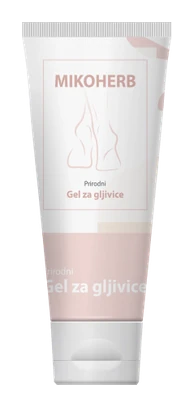
Herbal care for the daily part of this
Mikoherb gel for every day and the Mikotea soak once a week. Cosmetic products, honestly described, delivered across nine Balkan markets.
Choose your countryCommon questions
How long does a toenail take to grow out completely?
A toenail grows roughly one millimetre per month, and a big toenail is 12–15 mm long. Full renewal therefore takes the better part of a year. Any change from care shows first at the base, near the cuticle.
Can I use nail polish while caring for my nails?
Polish blocks contact between any product and the plate, and it hides the one thing you need to watch — the newly grown section at the base. During a care period it is more useful to leave nails bare.
Does the whole household need to do this?
If shared slippers, bathmats or nail tools are in use, treating one person while the tools stay shared is the most common reason a routine seems not to work. Personal clippers cost less than any product.
Is a foot soak necessary or is a gel enough?
A gel alone is a complete daily routine. A soak is worth adding when the nail plate has thickened enough that cutting it is difficult — it makes the mechanical part possible without splitting the edge.
What is the single most useful change?
Rotating two pairs of shoes so each dries for a full day. It sounds trivial and it outperforms most products, because it removes the condition that keeps the problem going.