Skin between the toes — why it softens, splits and itches, and what a workable routine looks like
The narrow space between the fourth and fifth toe dries last and stays damp longest, which is why it is almost always where trouble starts. This guide covers what the skin there actually goes through, why gym and pool routines make it worse, and how to build daily care that survives past week one.
Why the fourth space is always first
Look at a foot from the front and the anatomy explains itself: the gap between the fourth and fifth toe is the narrowest and deepest of the four. It gets the least air, holds the most moisture, and dries last after a shower. Add a closed shoe for eight hours and the skin there stays soft and pale — the technical word is macerated — which makes it fragile.
Fragile skin splits. Split skin itches, and scratching it makes it worse. That loop is the entire everyday mechanism, and it runs on moisture rather than on anything exotic.
Softened white skin
Pale, slightly swollen skin in the fold between the toes that looks like it has been in water too long. Usually the first visible sign.
Fine splitting
A shallow crack at the base of the gap. Often noticed as stinging in the shower rather than seen.
Scaling
Dry flaking along the side of the foot or under the toes, sometimes without any itching at all.
Itching after shoes come off
Classic timing: the skin has been warm and damp all day and reacts as it cools.

What training routines add to it
Nothing about sport is bad for feet — but three specific habits around it do most of the damage, and all three are easy to change.
- Showering barefoot in a shared facility. Flip-flops in the changing room and shower cost almost nothing and remove one of the main shared surfaces.
- Putting trainers back in a bag while damp. A sports bag is a warm, closed, humid box. Shoes should come out and dry in open air after every session.
- Wearing the same pair every session. Two pairs alternated means each dries a full 24 hours. This one change outperforms most products.
The fourth habit is drying properly afterwards. Thirty seconds with a towel corner dedicated to the toe spaces, or a hairdryer on cool, is enough — and it is the step almost everyone skips.
A daily routine that survives past week one
- 1
Dry the toe spaces deliberately
Not the same rub as the rest of the foot. Separate the toes, dry each gap, especially the outer one.
- 2
Apply a thin layer of care
Something that absorbs quickly. Thick ointments between the toes trap moisture, which is precisely the wrong direction.
- 3
Fresh socks, dry shoes
Cotton or wool rather than synthetic where possible, changed daily, and never into the same damp pair of shoes.
A gel is the sensible format here for the same reason: it is thin, it absorbs, and it does not add to the moisture. That is why Mikoherb is a gel rather than a cream, and why a routine built around it tends to survive longer than one built around an ointment.
This is guidance on everyday cosmetic care of the skin. It is not a diagnosis and not a treatment plan. If the skin is painful, weeping, spreading redness up the foot, or if you have diabetes or circulatory problems, ask the professional who follows you before starting anything.

Comparing the practical options
| Option | Effort | What it changes |
|---|---|---|
| Drying the toe spaces properly | 30 seconds a day | Removes the condition that causes maceration — the highest-value habit here |
| Rotating two pairs of shoes | One-off cost | Each pair dries fully; the single biggest environmental fix |
| Flip-flops in shared showers | One-off cost | Removes one shared-surface route |
| A quick-absorbing gel twice a day | ≈1 minute a day | Care and comfort for the skin; keeps the routine pleasant enough to continue |
| A weekly herbal soak | ≈30 minutes a week | Softens the plate and heels; makes cutting and filing possible without tearing |
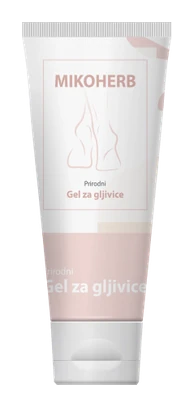
Daily care in a format that absorbs
Mikoherb is a light gel rather than an ointment — it goes on in under a minute and lets you put a sock on straight away.
See prices in your countryQuestions
Why does it always start between the outer toes?
That gap is the narrowest and deepest of the four. It gets the least air, holds moisture longest and dries last, which makes the skin there soften before anywhere else.
Should I use powder or a gel?
Both have a place: powder inside shoes to manage moisture, a fast-absorbing gel on the skin. What to avoid between the toes is a thick ointment, because it holds moisture in exactly the wrong place.
Do I need to treat my shoes too?
Drying them fully between wears is the substantive step. Alternating two pairs so each gets 24 hours does more than any spray added to a shoe that never dries.
How long before the skin looks different?
Skin responds far faster than nails. Most people describe drier, calmer skin between the toes within the first week — provided the shoes and socks part of the routine has changed too.
Can I keep training?
Yes. Change the routine around training rather than the training itself: flip-flops in the shower, shoes out of the bag to dry, deliberate drying of the toe spaces afterwards.